

The gaps in your Loyalty project won't surface until they're too expensive to fix…
A structured assessment from Experts who've led many of these projects and know exactly where and how they break down
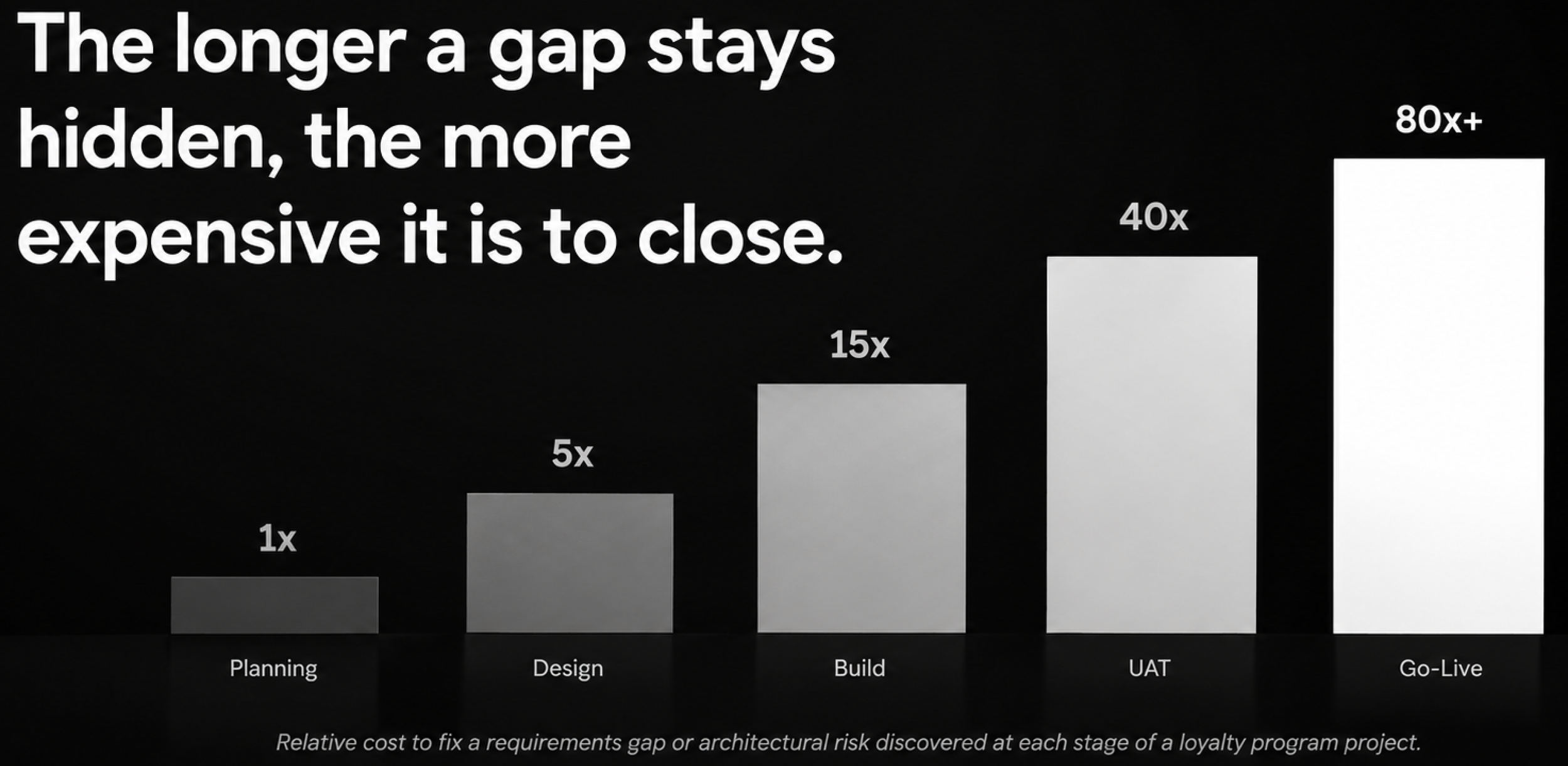
Missing stakeholders and requirements. Untested business case assumptions.
Technology decisions that quietly lock the program into constraints before anyone realizes it.
These aren't edge cases. They're what happens in most loyalty program implementations.
How Do These Gaps Emerge?
-
Stakeholder Gaps
Finance, operations, legal, IT, customer service, and merchandising brought in too late and requirements surface after the design is already locked in. At that point, accommodating them means rework or compromise.
-
Unexpected Conflicts
Each team's requirements are reasonable on their own. The problem is what they mean for everyone else. When cross-functional implications aren't mapped in advance, they become implementation conflicts discovered under deadline pressure.
-
Tech & Data Constraints
Technology and data flow decisions made early in a program carry hidden implications for customer experience and operational processes. These constraints aren't always obvious until they're in the way.
-
Risk Blindness
Teams deep in execution underestimate what could derail them. By the time risks surface, the window to fix them cheaply has already closed.
Checkpoint Loyalty
Checkpoint is a structured assessment that surfaces what's missing before it becomes expensive.
Every stakeholder with a requirement gets identified and heard.
Inputs are cross-checked against each other and tied directly to the business case.
The technology design gets pressure-tested against where the program is actually heading and not just where it is today
Delivered in 4-6 weeks and structured to integrate into your project plan, not interrupt it.

What you walk away with
-
Business Requirements & Business Case Alignment
Key Requirements from all required functions identified, conflicts are resolved and requirements are tied directly to the business case
-
Technology & Data Hot-Spot Analysis
Technology decisions and data flows designs that represent short and longer-term risks or constraints with specific, actionable remediation plans
-
Prioritized Remediation Roadmap
Each risk is assessed for business value, probability, and fix window, with mitigation plans that your teams can integrate into the project plan and execute
-
Strategic Red Flags & Blind Spots
The risks and issues the team is too close to see or too committed to challenge. Expert observations on the strategy, value proposition, organizational structure, and operating model that represent meaningful risk to project and operational success, with direct recommendations on each
“Checkpoint isn't a generic consulting frameworks. It's built on years of building, launching, and fixing loyalty programs at major retailers and being in the room when a key stakeholder raised a requirement that should have been identfiied months earlier. We know what that moment costs”
The people running this assessment have sat on both sides: as the operators accountable for program delivery, and as the platform builders who know how these systems are actually architected. This combination is what makes the findings inimitable, specific and comprehensive. We've seen these failure patterns before. We know where to look

The earlier in the project we talk, the more options you have
Most teams we work with wish they'd called a month sooner